
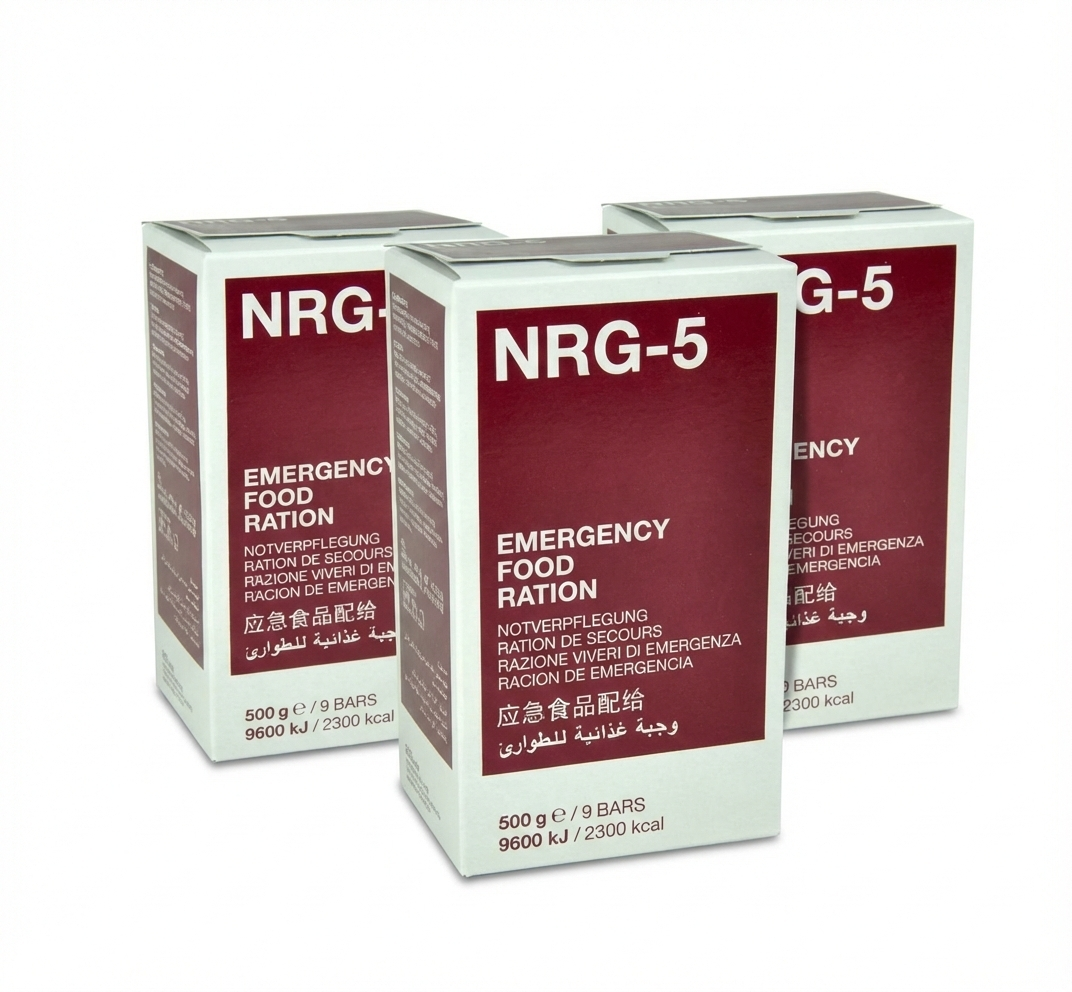
72-hour Emergency Ration NRG-5 Pack (1 person) – 3 days of food
From€23.95
View product The Prepz guides Prepping
Supplies at home, equipment that works and a plan shared with your household. Find the essentials for the first 72 hours and what to add next.
Start with the basics
Build a supply you will actually use in three steps.
Count everyone in your household and note specific needs, such as baby food and pet supplies.
Bring food, drinking water, lighting and other emergency supplies together. Check what works and what is still within its shelf life.
Use the checklist below. Start with the basics; build a larger supply once you know what your household uses.
From drinking water to a complete emergency kit. Check what you already have and add what you need.
Plan for your household size and the number of days. Browse drinking water for your emergency supplies.
Browse productsChoose according to the number of people, shelf life and dietary needs. Keep food ready that does not need heating, too.
Browse productsConsider where you can cook safely, which fuel is needed and what you can eat without cooking.
Browse productsStart with a light and a phone charger. Compare power output and connections if you want to run more devices.
Browse productsCheck what you already have and add personal care supplies separately.
Browse productsCompare the contents with your own list. A kit does not automatically cover everything your household needs.
Browse productsCompare contents and specifications, then choose what is missing.
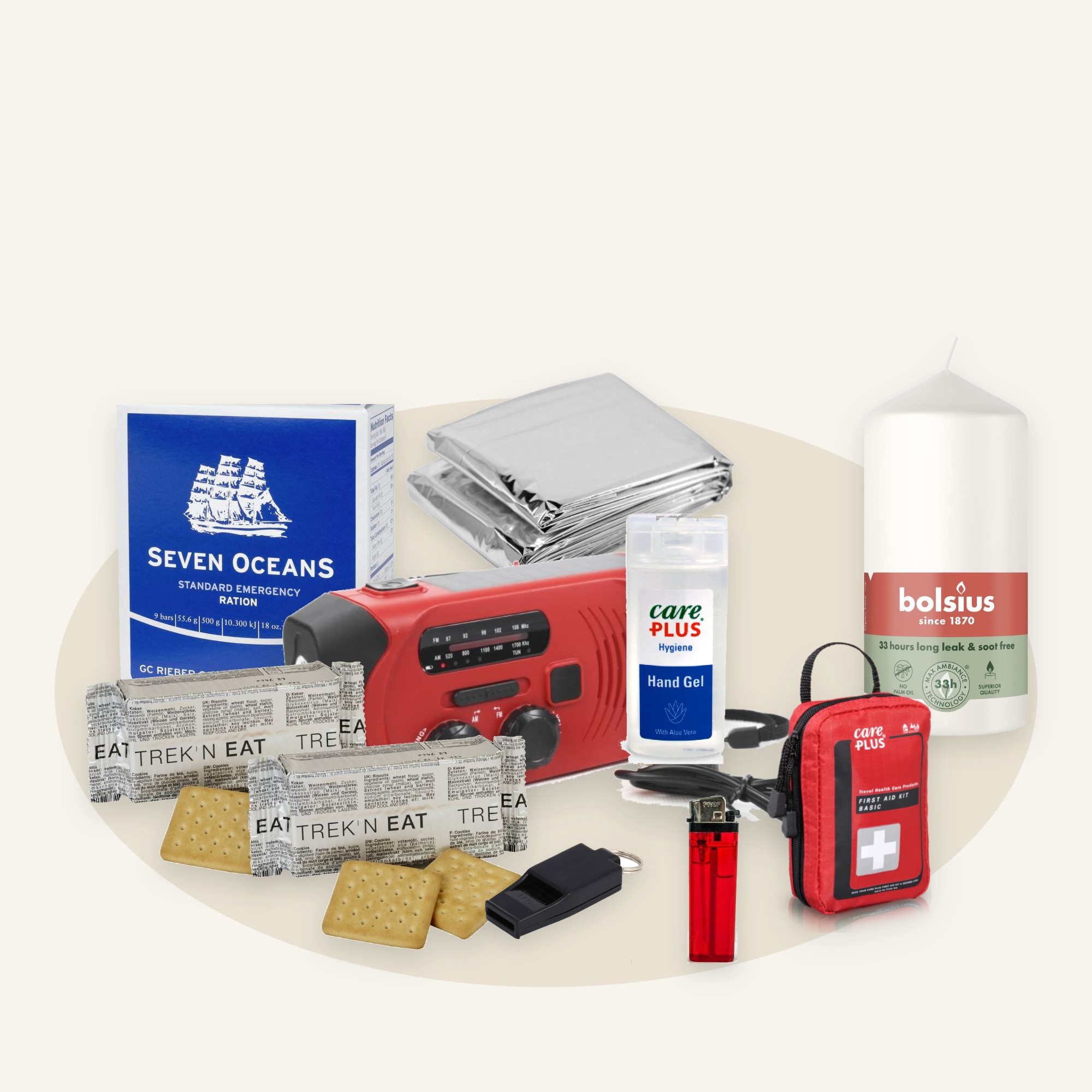
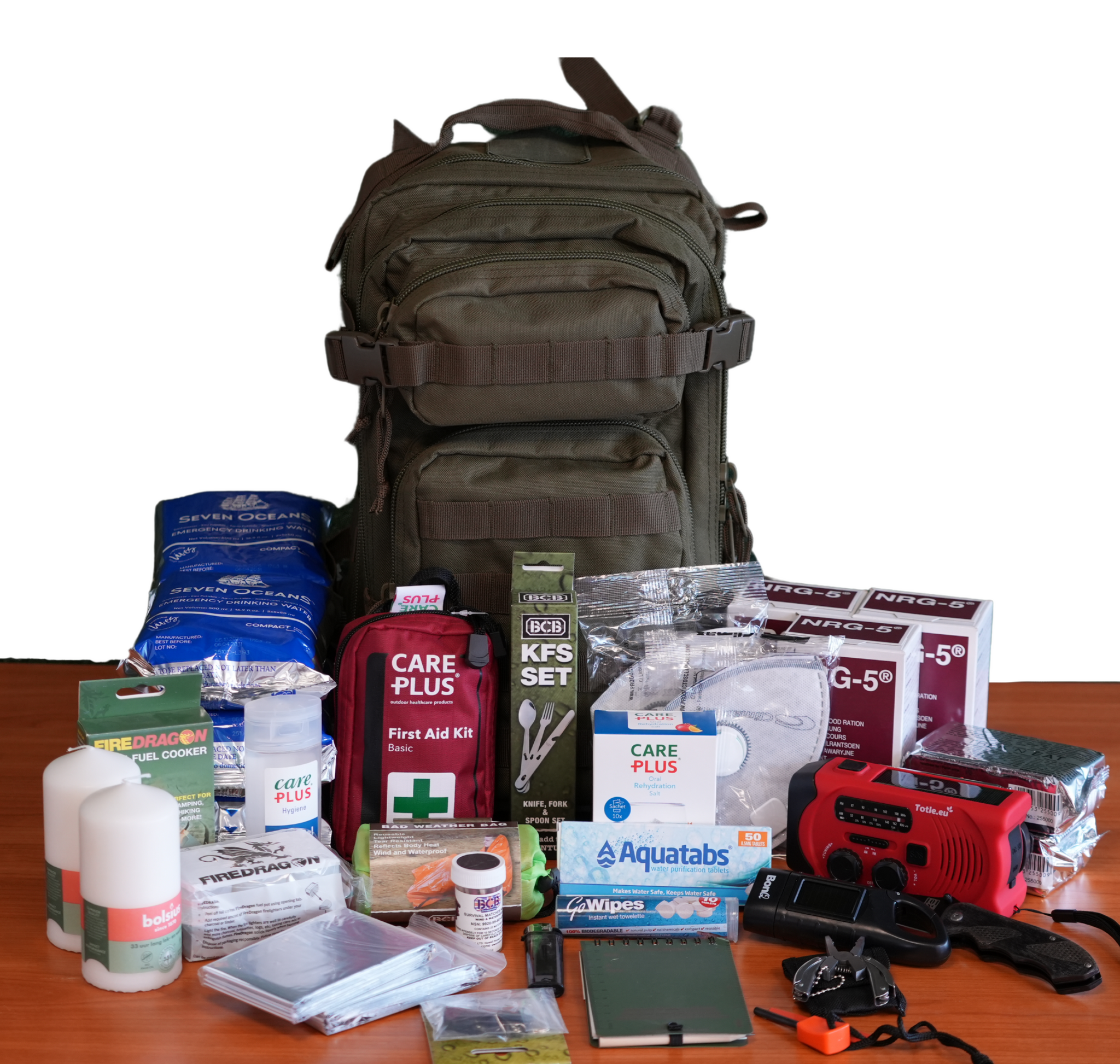
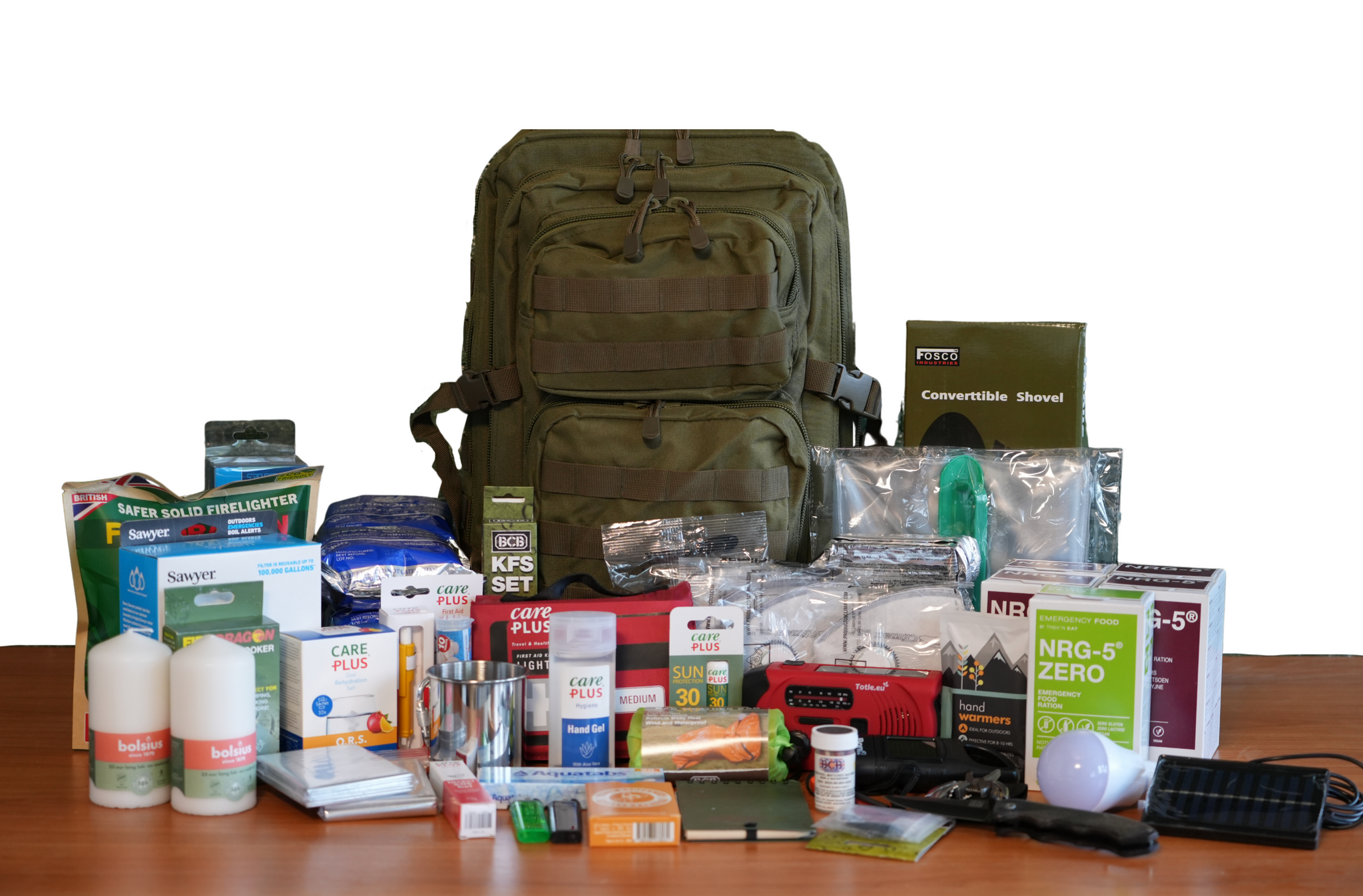
A kit can make gathering supplies easier. Compare its contents with what you are still missing at home.
You add the rest yourself
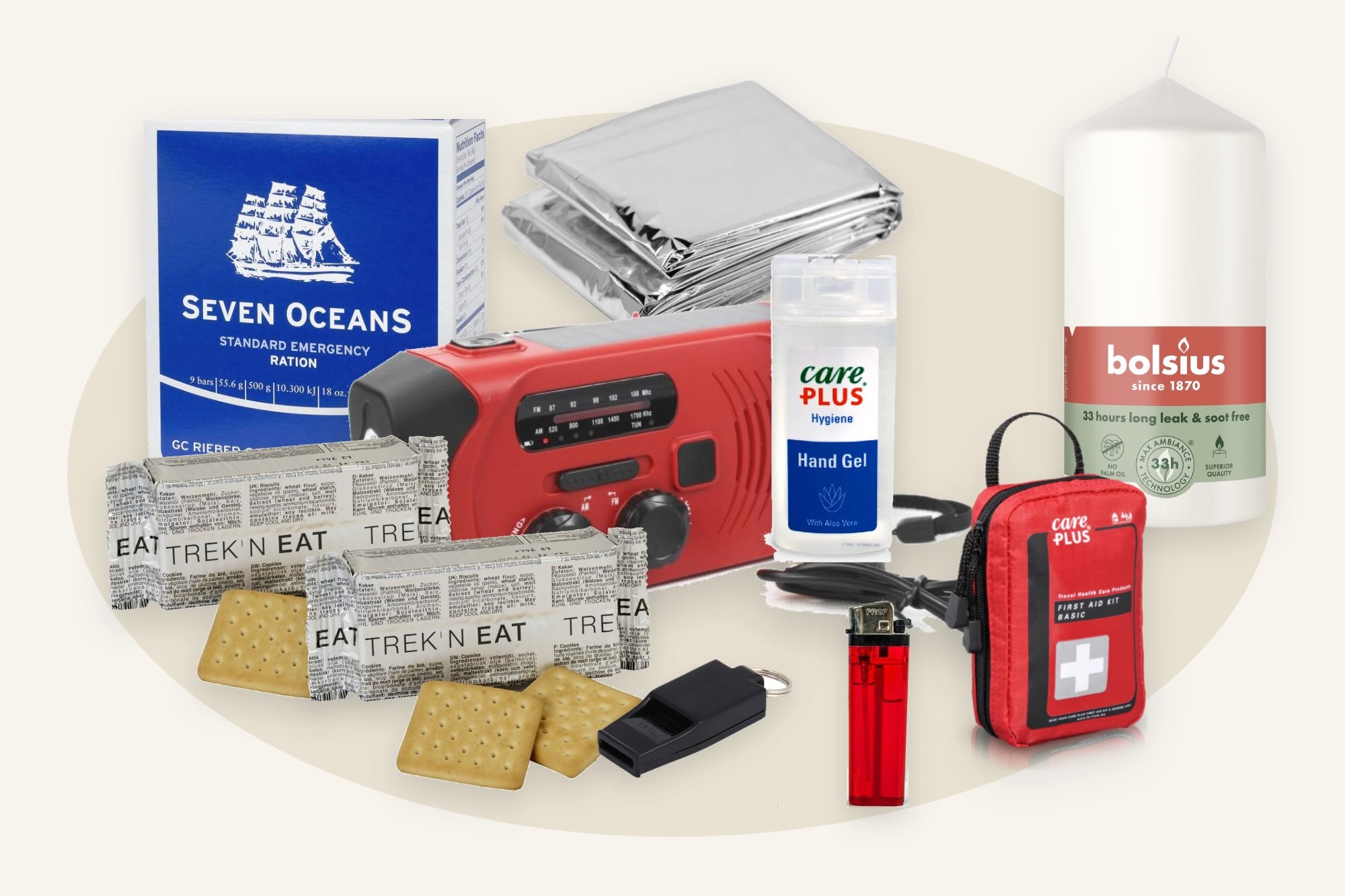
The Basis Noodpakket with checklist brings together an emergency radio, first aid kit and emergency ration, among other items. You add the rest of your supplies yourself.
More items together
Would you like several items in one package? Compare emergency kits by contents, number of people and what you still need to add.
Always check the water quantity. Denk Vooruit recommends 9 litres per person for three days. The bucket kit's contents list states 3 litres, leaving another 6 litres to add for one person. Calculate the total for your whole household and check the current contents when ordering.
Calculate how much water to addCount the water you actually have
Bought an emergency kit or assembled your own? Count the drinking water. The calculation for three days starts at 9 litres per person. Enter only litres already stored.
A filter, tablets or an empty container do not count as litres of drinking water.
9 litres calculation basis · 0 litres entered
Add another 9 litresIn 500 ml outer packs: 18 (rounded up). You can also add other drinking water.
Calculation basis: at least 3 litres per person per day. Plan separately for extra personal needs and pets. This calculation does not assess your entire emergency kit.
Count drinking water with sound packaging and valid expiry dates. A filter, tablets or the capacity of an empty jerrycan are not a water supply.
Calculate 3 litres × people × days. Subtract the litres already stored, with a minimum result of zero. One person with 6 litres needs another 3 litres for three days.
Use supermarket water, hygienically stored tap water or measured drinking-water packs. Check the date and storage instructions for each product.
Note how many people and days your litres cover, where they are stored and when you will check them. Keep a clean portable container ready for an emergency water collection point.
The calculation basis is 9 litres. If you have no other drinking water stored, add 3 litres. That can be six outer packs of 500 ml or other safely stored drinking water.
A filter adds no litres to the drinking water already stored. It may help with a suitable source; its performance depends on the product and contamination. Follow the instructions and, during a water disruption, your water supplier’s advice.
The sales unit for item 70224825 is a 500 ml outer pack: five double inner sachets of 2 × 50 ml, making ten 50 ml portions. Count one outer pack as 0.5 litres.
Checklist
0 of 7 items checked
Your progress is saved in this browser. Tick off what you have checked yourself.
In the print version, use ⌘P or Ctrl+P to print.
Prepping
Supplies help. Knowing what you will do together matters just as much.
Choose a meeting place and a contact person. Write phone numbers on paper so you do not rely solely on your phone.
Agree who will collect children and who will check on someone who needs help. Discuss what to do if the lift is not working, too.
Keep it with your emergency supplies and give your emergency contacts a copy. Use the fill-in plan from Denk Vooruit to record your arrangements.
Start with the basics
Agree who you can turn to if communication fails. Write down important numbers and tell someone where your emergency supplies are kept.
Agree who will collect them and where you will meet if you cannot make calls. Explain the plan in a way that suits their age.
Discuss support with mobility, medicines or medical equipment with those involved and their healthcare provider in advance.
Safe use
Choose a dry, accessible storage place that your household knows. Have a bag ready for items you would need to take if you leave. Check contents and expiry dates every six months, and adapt your supplies when your household changes.
Prepping
For 72 hours, allow 9 litres per person: 3 litres a day. Add food and drinking water for pets separately.
No. First check what you already have and compare a kit with your own list. Personal essentials always depend on your needs.
Agree how you will stay in contact, where you will meet and who needs extra help. Keep the plan in a known place and discuss it together.
Use this list as a starting point. In an emergency, always follow instructions from the authorities.
Add what you need
Compare your own list with a kit's contents before choosing. Check which personal items you still need to add.