

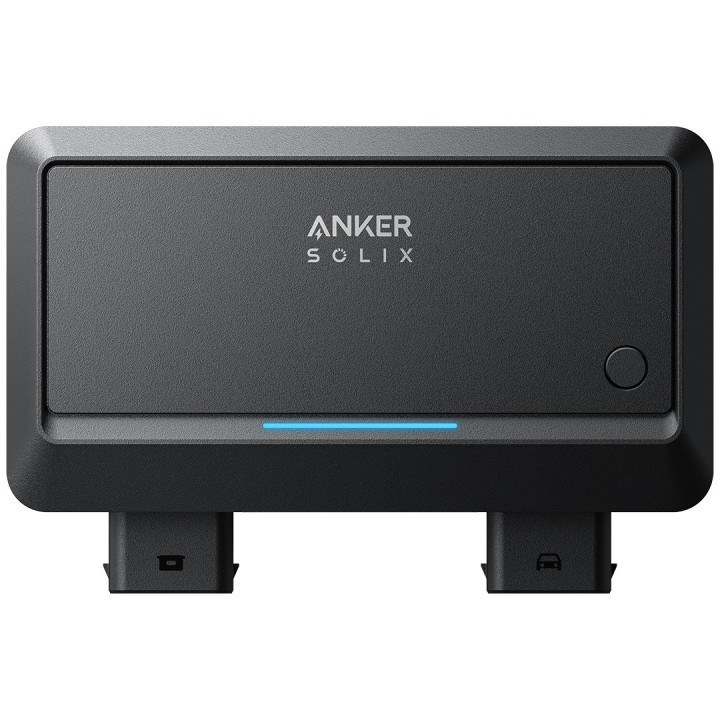
Anker SOLIX AC-Connector voor vaste aansluiting (hard wiring)
From€19.00
View product The Prepz guides Power cuts
Lighting at home, a charged phone and news on the radio. Find out what you need and when extra backup power makes sense.
Choose your backup power
Choose according to what you want to do when mains sockets stop working.
A torch or rechargeable lamp. Test it and keep suitable spare batteries or a charging option ready.
A powerbank with a suitable cable. Check that the combination actually charges your phone.
A battery-powered or rechargeable radio. Find and test your regional broadcaster in advance.
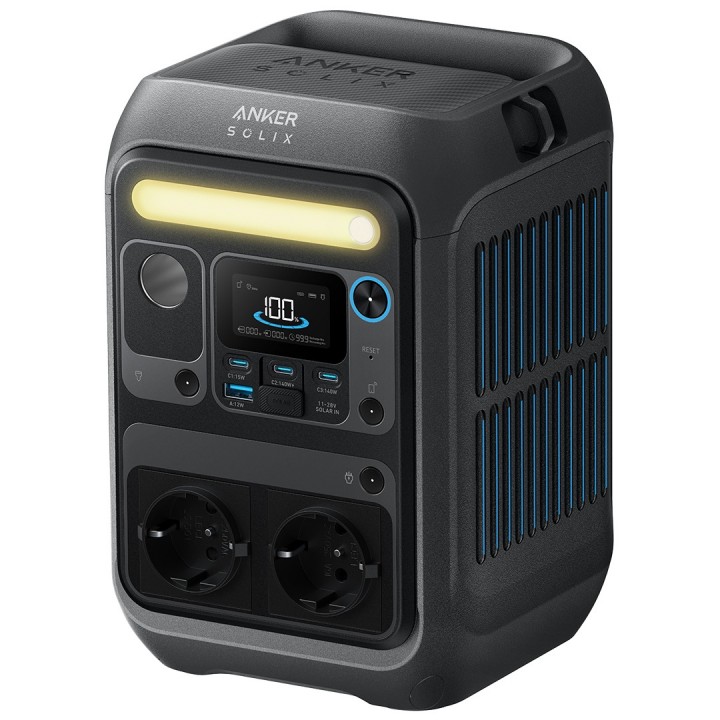
A power station, provided its connections and power output are suitable. See below how to work out the power and capacity you need.
As well as lighting and backup power, think about recharging and eating without a working kitchen.
Compare contents and specifications, then choose what is missing.


Choose your backup power
Start with a powerbank and a suitable cable. Check which USB port and charging power your device needs. A separate torch and radio mean you do not rely on the same battery for everything.
Can your laptop charge through USB-C? Check the charging power it needs. A mains plug requires a suitable output socket. Your devices' combined power demand and starting surge determine what a power station must be able to supply at once.
Capacity in watt-hours (Wh) tells you how much energy is available. Use the calculator below for a steady load. For a fridge, measure consumption over the period you need: it switches on and off.
Calculate for your own devices
A 50-watt device running for four hours uses 200 watt-hours. Enter the total steady power draw for an initial estimate.
energy for your devices. Allow extra battery capacity for conversion losses and the power station's own consumption.
This is an estimate, not a guaranteed battery runtime. Measure varying consumption separately, for example for a fridge. Also check connections, continuous output and starting surge.
Power cuts
Use current information from your grid operator, local authority or regional emergency authorities.
Listen to your regional broadcaster without internet. In the Netherlands, you can report a power cut by calling 0800-9009; use 112 for an immediate emergency, not just to report an outage.
Whether food is still safe depends on its temperature, the product and how long the outage lasts. Use the food-specific guidance from the Netherlands Nutrition Centre; there is no single safe storage time for everything.
Check whether someone nearby needs practical help. You might share information or help charge a phone.
Checklist
0 of 5 items checked
Your progress is saved in this browser. Tick off what you have checked yourself.
In the print version, use ⌘P or Ctrl+P to print.
Safe use
Include food you can eat without heating, and keep warm clothing and blankets ready. Do not use a barbecue indoors or as a heater: combustion can produce carbon monoxide. An open window does not make it safe. Want to cook or heat electrically with a power station? Check the power demand and energy consumption, as these appliances can drain a battery quickly.
Power cuts
In the Netherlands, you can report a power cut by calling 0800-9009. Use 112 for an immediate emergency, not just to report an outage.
Listen to your regional broadcaster on a battery-powered radio. Look up the frequency in advance.
It is not guaranteed. Connections outside your home can fail too, so include a radio in your preparations.
Use this list as a starting point. In an emergency, always follow instructions from the authorities.
Add what you need
Start with your list and check each product's connections and specifications. A bigger battery is not automatically the best solution.