
Choosing a home water filter: start with the source
Choose a water filter for a defined purpose. Compare the water source, treatment, maintenance and evidence for specific contaminants.
No single water filter is the best choice for every home and source. Start by asking what you want to change: taste, an identified substance in the water or preparation for a supply interruption. Those goals need different solutions.
Does your tap water need a filter?
A filter is not automatically necessary when drinking water already meets the required standards. If you want to remove something, first obtain reliable information about your water and the specific issue. A different taste does not prove a health risk, and clarity does not prove safety. The CDC's filter-selection guide explains why understanding the source matters.
What do different systems do?
- Sediment filters: intended for particles, not automatically for dissolved substances or pathogens.
- Activated carbon: often targets taste or particular substances. Check the exact performance claim.
- Membrane filters: the specific membrane's properties determine its application.
- Reverse osmosis: requires suitable installation, maintenance and checks of the intended treatment.
- UV treatment: needs appropriate conditions and equipment; it does not generally remove chemicals.
A gravity system describes how water flows. It does not by itself explain which contaminants its filter element removes.
Ask for evidence about the specific substance
Look for the exact model and contaminant in the documentation or certification. A taste-improvement test does not prove removal of PFAS, viruses or all heavy metals. Check conditions and replacement intervals too. Products with similar names may use different elements.
Emergency supplies need a separate decision
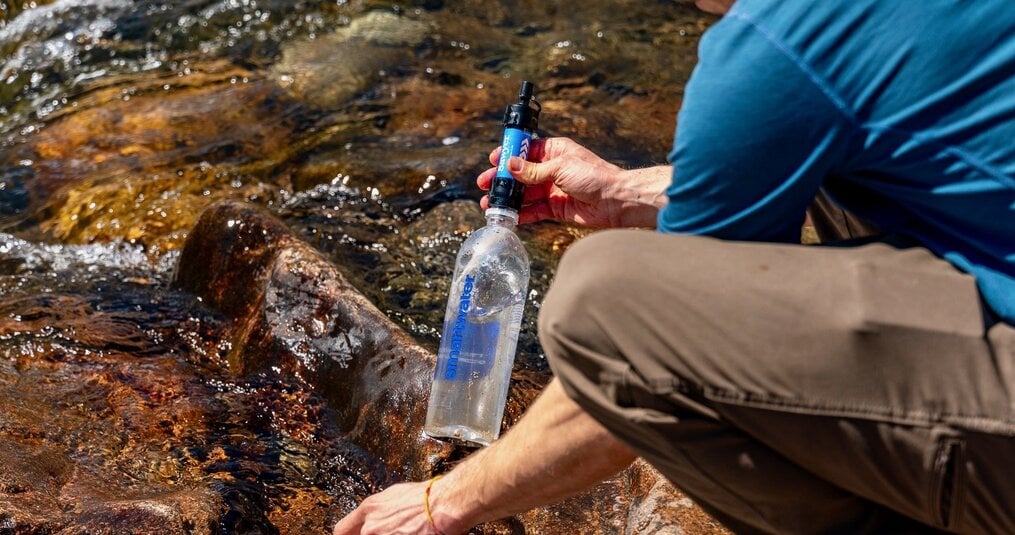
A tap filter is of no use if there is no water at the tap. An outdoor filter does not automatically make ditch water or floodwater drinkable either. Store reliable drinking water first; choose supplementary equipment around a suitable source and its instructions.
Compare running costs and everyday use
Record how much water you need, where the system fits, whether it requires power or water pressure and who will maintain it. Include replacement components in the cost. Ask for clarification before buying if an essential capability lacks evidence.
Compare water filters and packaged drinking water. Our Sawyer questions explain the limitations of compact outdoor filters, while the preparedness guide helps plan your overall supply.