
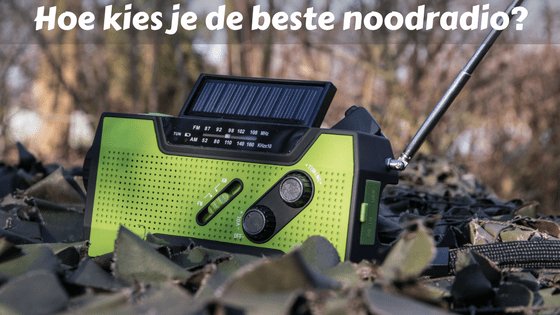
Choosing an emergency radio: reception and power
Choose a radio you can receive and operate at home. Compare FM, DAB, batteries and charging before a power cut.
The best emergency radio for your home is one that receives the station you need and runs on a power source you have ready. A long list of extra features is of little use if you first learn the controls during an outage.
Start with the station you need
For the Netherlands, Denk Vooruit points to regional public broadcasters on FM and/or DAB. Find the station for your area and test reception where you intend to use the radio. If you live in another country, check that country's official emergency information and local broadcasters.
See the Dutch government's radio guidance (Dutch). An FM radio does not receive the Netherlands' NL-Alert phone service in the same way as a mobile. Keep both information channels available where possible.
Choose a power source you can maintain
- Replaceable batteries: store the correct type separately and check them.
- Rechargeable battery: learn how to charge the radio and check its remaining charge.
- Hand crank or solar panel: treat these as additional charging options. They do not provide unlimited use without effort or suitable light.
Quoted battery life applies under particular test conditions. Volume, reception mode, the light and phone charging can change runtime. Compare like-for-like use and read the manual.
Try the controls before putting it away
Look for readable buttons, straightforward tuning and a display you can use comfortably. Can someone else in the household turn it on and find the right station? Write brief instructions and the station name on paper.
Extra functions are additions
A light or USB output can be useful. Keep the radio available for information, and consider a separate power bank for substantial phone use. A NOAA feature does not replace local emergency broadcasting outside its service area.
Your first practical test
Turn the radio on without mains power, find the station, listen for a while and check charging afterwards. Store it with its instructions and power supplies somewhere accessible. Compare emergency radios and explore our power-cut preparation guide.